Manufacturing
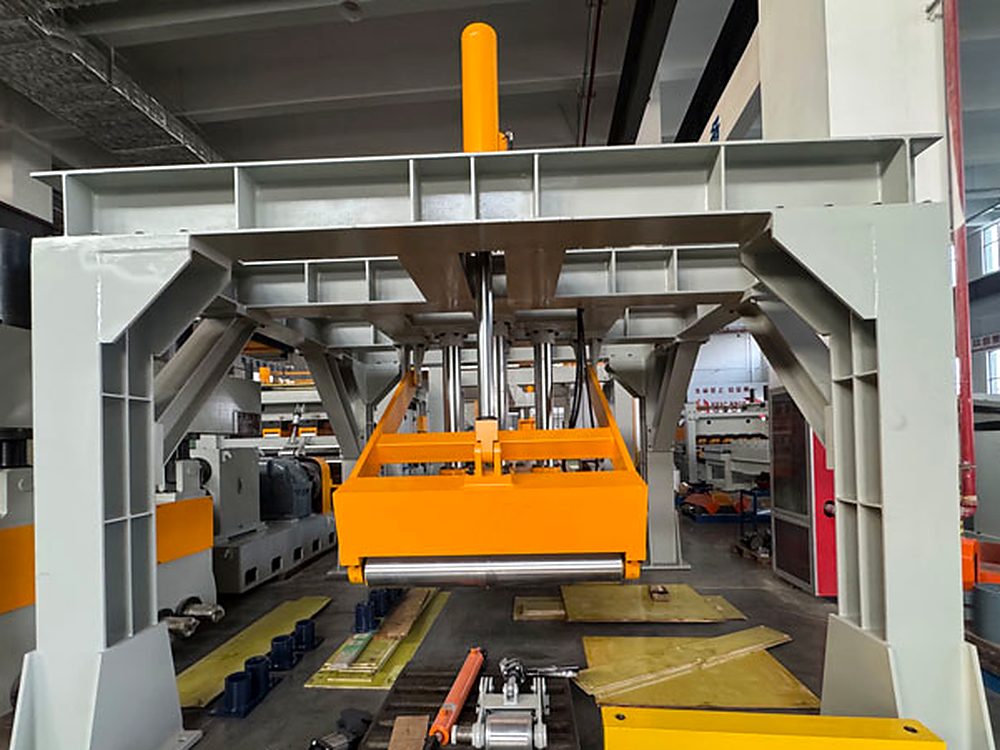
One workshop, from drawing to test run
Design, machining, assembly and the test run all happen under the same roof in Wuxi. Nothing is handed to a second plant and shipped straight out — which is why a line can be set up around your coil instead of picked from a catalogue.
Machining
The parts that decide the cut are made here
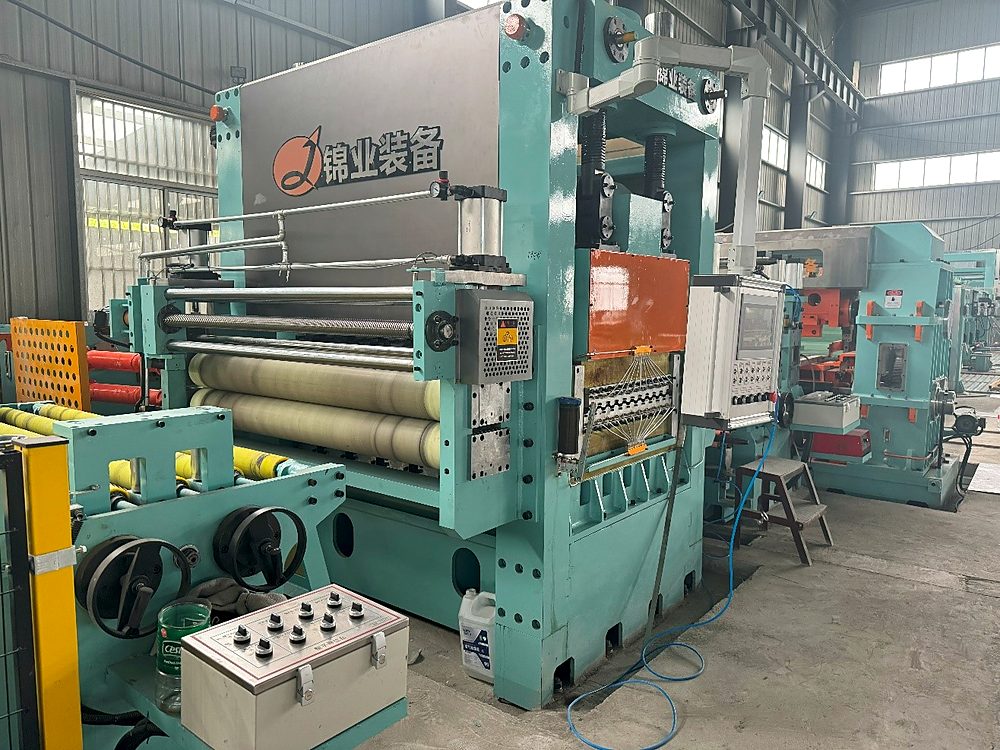
A slitting line runs true or it does not, depending on the shafts and the knife seats. Those are the parts we machine ourselves, on our own centres.
-
6 m × 3 m
Largest workpiece
The envelope of the 4-axis machining centres. A shaft for a 2000 mm wide line still fits with the journals and the knife seats on the same part.
-
One set-up
Key parts in a single clamping
The shafts for the uncoiler, the slitter and the recoiler are machined without being unclamped and re-aligned in between.
-
Furnace
Stress relief after welding
Welded frames and housings are tempered once welding is done, so the structure does not move after it has been machined.
-
25,000 m²
Workshop floor
The plant that came into use in June 2024, after the groundbreaking in December 2022. Machining, assembly and the test run are in the same building.
Machining a shaft in one clamping is not a slogan: if the journals and the knife seats are cut in two separate set-ups, the second one starts from whatever the re-alignment gave you. That error is built into the line before it ever runs.
The build
Eight stages, one sequence
The order below is the order the work actually happens in. Each stage leaves something the next one can check, which is how a line gets to the test run without surprises.
-
Drawing and process
Coil data becomes a line layout, a unit list and a process sheet. The thickness, width and coil weight decide what each station has to take.
-
Cutting and welding
Frames, bases and housings are cut and welded to the drawing. These are the parts that carry the roll loads, so the weld prep is not skipped.
-
Stress relief
Welded structures go into the furnace and are tempered. Weld stress released now is distortion that will not appear after machining.
-
Machining
Shafts, knife seats and mounting faces are finished on the 4-axis centres. The critical parts are the ones that set the gap between the knives.
-
Assembly
Frame, roll units, hydraulics and pneumatics are built into one line. The line is assembled as a whole, not as separate units to be mated on site.
-
Wiring and piping
Electrical cabinets, cable runs and pipework are fitted and tested here. Site work is then connecting the line, not finishing it.
-
Test run
The assembled line is run under power in the workshop, then dismantled for packing. See the section below.
-
Dismantling and packing
The line is broken into shipping sections, protected and packed. Oversize parts go on a flat rack rather than inside a container.
Test run
The first real run is not yours
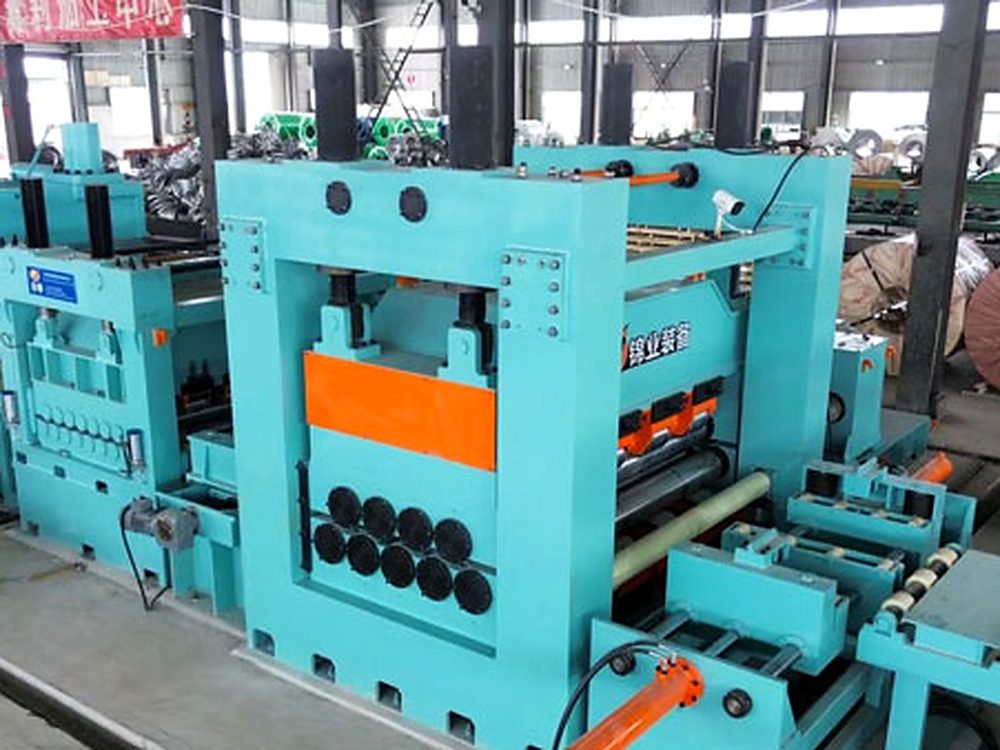
Before anything is packed, the assembled line is run under power in the workshop. Leveling, slitting or cutting, tension, measuring accuracy and the control sequence are checked on a complete line rather than on units sitting apart on the floor.
Faults found here are fixed here — by the people who built the line, with the drawings still on the bench. Once it is dismantled and loaded, that option is gone.
- Strip is run through the line, not just the motors turned by hand.
- The control sequence is proven end to end before the cabinet is packed.
- Buyers are welcome in Wuxi to watch the run before the line is taken apart.
On the floor
What has been through the workshop lately
Each row is a real order, taken from our own build reports. The designation is the coil the line was built for — not a catalogue range.
Packing and shipping
Heavy parts do not travel in a container
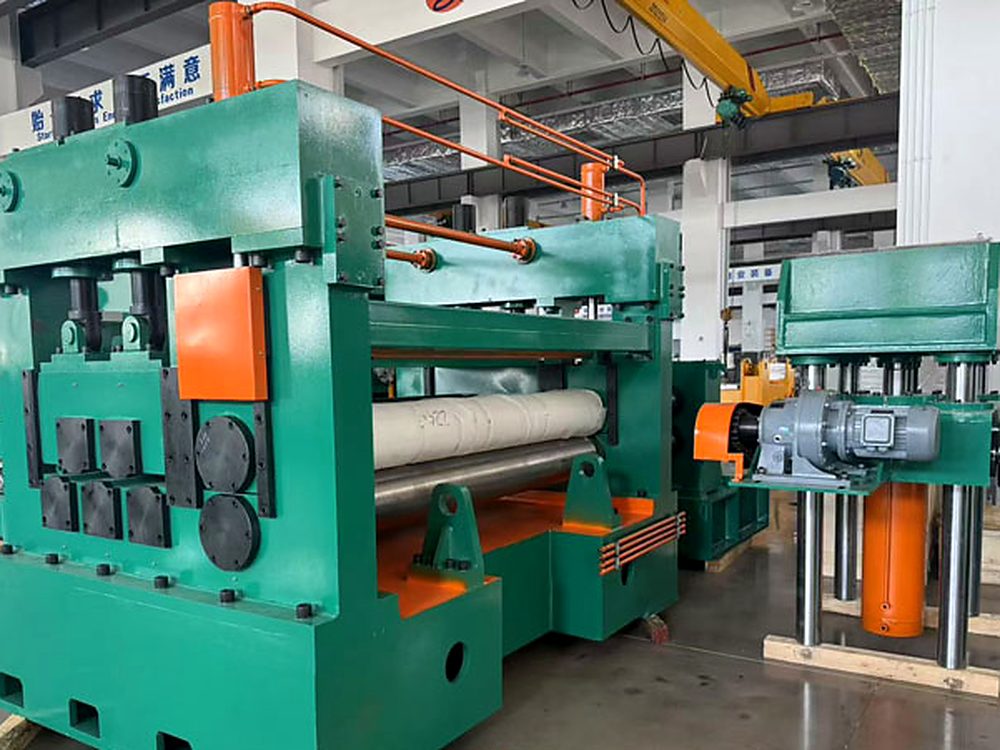
When the 13 × 1800 flying shear cut to length line was loaded, the leveler was both heavy and tall. It went on a flat rack instead of inside a container — a load that has to be lashed properly, so an experienced engineer is brought in for the job.
The line is dismantled into sections that can be handled and braced. What arrives on site is a set of shipping sections, not a pile of steel waiting to be identified.
- Oversize and heavy units go on a flat rack.
- Loading is done by a specialist, not by whoever is free that day.
- The line is taken apart before loading, so each section can be lifted on its own.
Next step
Ask about the build, not just the price.
If you want to know how a line will be built for your coil, how the test run is done, or whether you can come and see it — send the specification and ask. We answer the process questions as readily as the commercial ones.