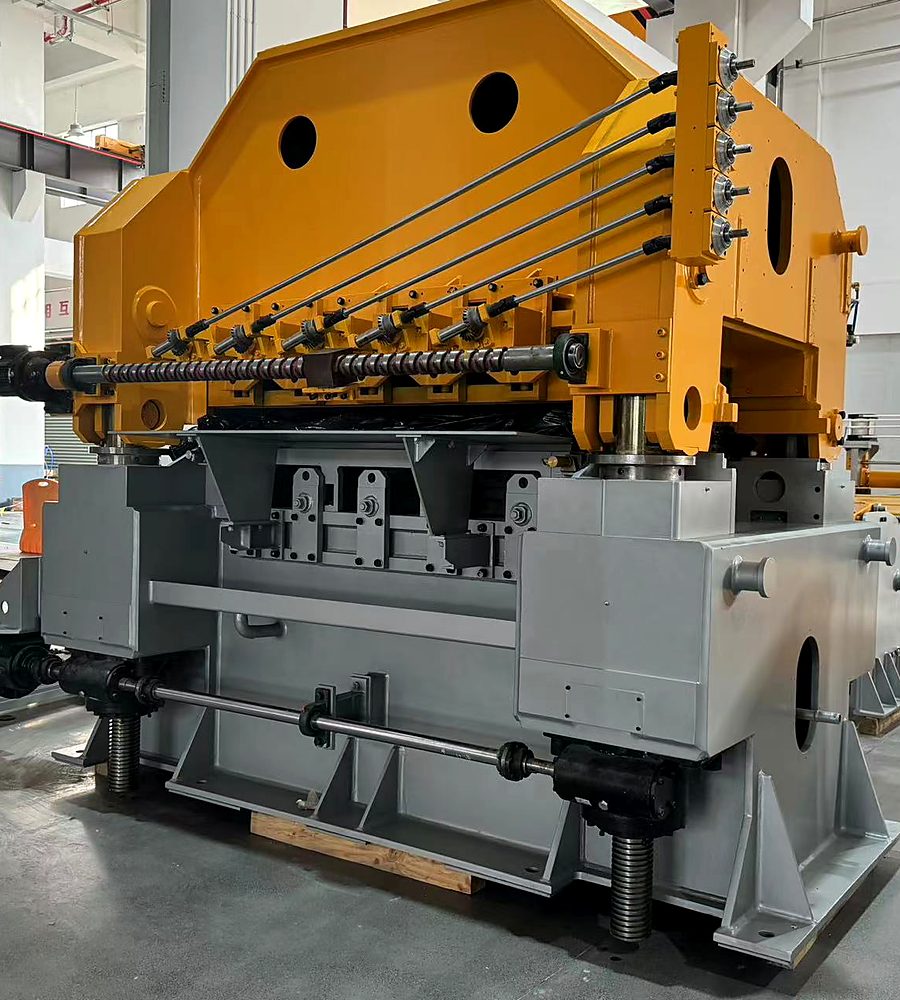
01
Flying shear
The strip keeps running while the shear travels with it and cuts on the fly. On the thin-gauge stainless machines a cut takes about 0.5 s and the shear can run up to 150 cuts a minute.
Solutions
Start with the task — slit the coil into strips, or cut it into sheets. Then the gauge, then the shear. Everything below is the range we build, with the models that cover each band.
Step 1 · The task
Everything else — leveling, recoiling, stacking, the shear — follows from which of these two the finished product needs.
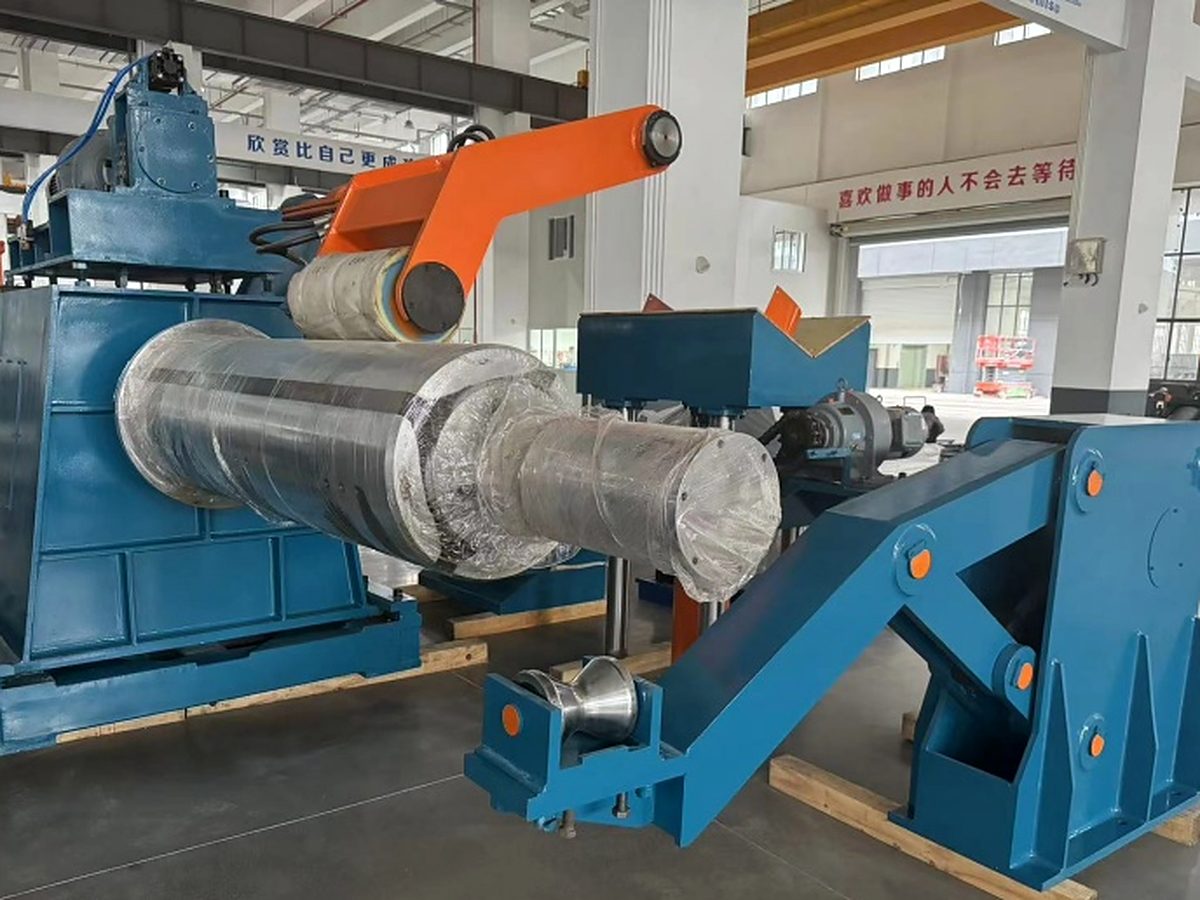 01 / Slitting
Slit wide coil into strips
The coil is uncoiled, leveled, slit to the strip widths the next process needs and rewound under tension. Scrap is wound separately so the strips stay clean.
See the slitting models
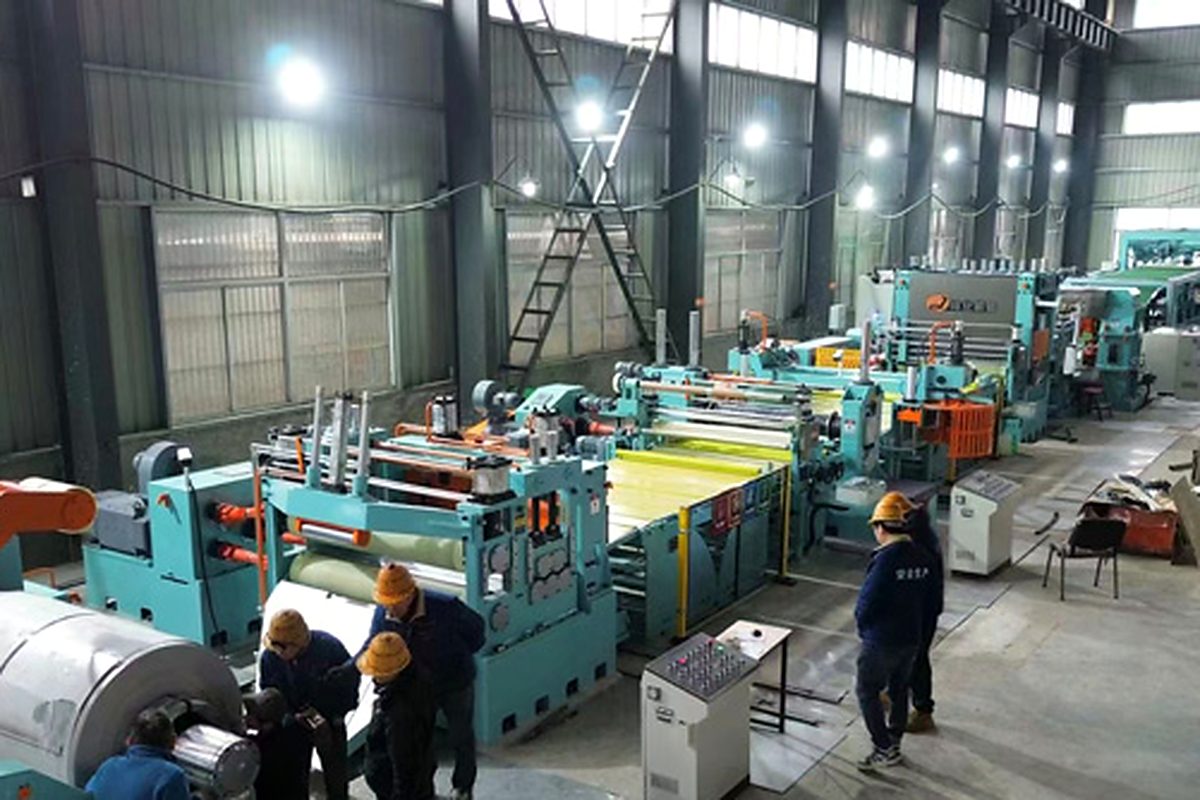 02 / Cut to length
Cut coil into flat sheets
The coil is uncoiled, leveled, measured and cut to length, then stacked as sheets. Rotary, flying and swing shear versions suit different thickness and surface needs.
See the cut to length models
Step 2 · The gauge
Each chip is a machine that exists, labelled with the thickness range and strip width in its designation. Click through for the full specification.
Up to 3 mm
Thin gauge, high precision
9 models
Slitting line
Up to 6 mm
Medium gauge, general purpose
3 models
Slitting line
Cut to length line
Up to 16 mm
Heavy gauge, thick coil
4 models
Slitting line
Cut to length line
17 models in total. Not banded above: High Speed High Precision Automatic Steel Sheet Slitting Line Machine — configured per project, so ask us for its working range.
Step 3 · The shear
On a cut to length line the shear decides the surface finish, the accuracy and the cycle time. These are the four we build.
01
The strip keeps running while the shear travels with it and cuts on the fly. On the thin-gauge stainless machines a cut takes about 0.5 s and the shear can run up to 150 cuts a minute.
02
A rotary shear head is built for stainless coil: the 0.3–3 mm machine in the range takes strip up to 1650 mm wide. Cutting is continuous, so the line does not stop for every sheet.
03
The swing shear cuts high-tensile coil into trapezoidal blanks rather than plain rectangles — the shape used for stamped parts such as automobile fenders and appliance panels.
04
Pneumatic on thin sheet, hydraulic on thick: the line stops under encoder measuring, then the blade comes up through the sheet. This is the shear the heavy-gauge and heavy-duty lines use.
Custom configuration
Lines are built to order, so the working range, the units and the shear are set per project rather than picked off a shelf. Five inputs are usually enough to start.
Not sure about one of them? Send what you have — the rest can be worked out on a call.
Carbon or stainless, and the grade you buy to — the heavy-duty lines are built around grades such as Q235, Q345 and S355.
The coil you actually run, not the nominal range of a catalogue sheet.
Slitting line uncoilers are built for 15–20 t or 20–30 t coils, so the weight decides the uncoiler and the handling.
Strip widths, or sheet length and the tolerance you have to hold on every sheet.
Power supply, floor space and lifting capacity where the line will stand.
Next step
Thickness, width, grade and the strip or sheet you need to end up with is enough to start. We will come back with the line configuration and the working range it has to cover.