
What Decides Cut to Length Accuracy on a Coil Line?
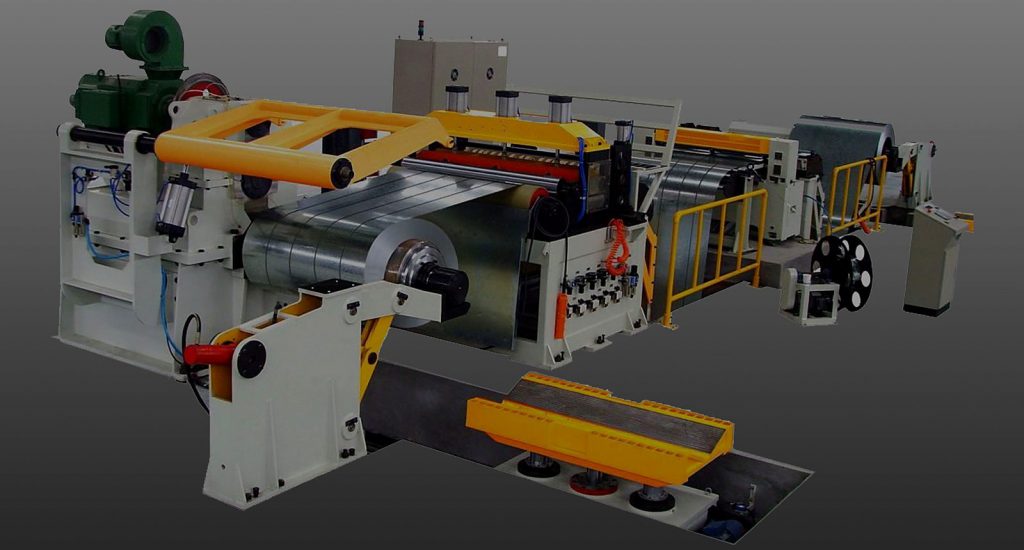
Cut to length accuracy is set by where the strip is measured, not by how the shear is controlled. Length error creeps in at four points: the measuring roll, the leveler, the shear’s response time, and the way the sheet is stacked. A line that measures before the leveler is measuring a length the strip will no longer have once it is flat.
Where the length error comes from
- The measuring roll slips. A hard roll on oily or polished strip under-reads, and the error accumulates along the coil rather than appearing on one sheet.
- The leveler stretches the strip. Flattening removes coil set and can add 1–3% length depending on the material and the amount of deformation. Measure upstream of the leveler and every sheet is short by that share.
- The shear responds late. Between the “length reached” signal and the blade actually closing, the strip keeps moving. At 100 m/min, 10 ms of delay is 1.7 mm of overshoot.
- The stacker drops the sheet. A sheet that slides or bounces on landing is dimensionally correct and stacked crooked, which reads as a length problem at the press.
Only one of those four is a shear problem. This is why length tolerance and shear type are separate decisions, even though they are usually discussed together.
The measuring roll and the encoder
Length is counted by a roll running on the strip, coupled to an encoder. Everything about that roll matters: its diameter, its hardness, how evenly it is pressed against the strip, and whether it runs on the top or bottom face.
- Soft-covered rolls grip galvanised and stainless without marking them, but compress, so the effective circumference is smaller than the nominal one.
- Hard rolls hold diameter better but slip on oiled strip, which loses length silently.
- Pressing force has to be consistent across the width. A roll loaded on one side reads a slightly different length on the two edges.
The practical consequence: a line is calibrated with a measured sample, and the calibration factor is only valid for the material and gauge it was taken on. Change from cold rolled to stainless and the same factor can be out by a millimetre per metre.
Measure after the leveler, always
Because levelling changes length, the measuring roll belongs downstream of the leveler and upstream of the shear. Lines that measure at the uncoiler — cheap to build, easy to service — are accurate only on material that is already flat and stays flat.
There is a second reason for measuring late. The strip between the leveler and the shear is under control: its tension is set, its speed is known, and its path is short. Every metre of strip between the measuring point and the blade is a metre where the length can still change.
How the shear type limits what you can hold
A stop shear cuts from rest, so the only error is the positioning of the strip against the gauge. In practice that is a mechanical question: how accurately the line can decelerate to the set point and hold there while the blade closes.
A flying shear cuts while both the strip and the blade are moving, so accuracy depends on the synchronisation between carriage and strip, and on the response of the servo loop. The advantage is speed without an acceleration cycle; the cost is that the timing must be right continuously, not just at each stop.
A rotary shear cuts continuously at a fixed knife position, which makes length control almost entirely a matter of strip speed against knife speed — simple in principle, and the reason it holds length well at high speed on thin material.
The first sheet is always the worst one
At the start of a coil, the line accelerates from threading speed to production speed. The first few cuts happen during that ramp, and the deceleration before a stop-cut adds another transient. Most control systems handle this with a compensation table indexed by speed, or by measuring the first sheet and correcting the offset.
If your length tolerance is tight, ask what happens to the first two sheets after a coil change. On many lines they are cut long or short by a few millimetres and are simply scrapped. That is normal, but it should be a known quantity rather than a surprise at the press.
Squareness is a separate tolerance
Cut length and squareness are usually specified together and measured separately. Length is the distance between two cuts; squareness is the difference between the two diagonals of the sheet, or the deviation of the cut edge from 90° to the strip edge.
Squareness is set by the blade’s alignment to the strip path and by the side guide holding the strip straight into the shear. A line that holds length to ±0.5 mm and squareness to 1 mm across a 1500 mm sheet is doing well; if the guide is worn, length stays correct while squareness drifts, and the sheets jam at the press rather than at the line.
What to ask for in the specification
- Length tolerance — state it against a sheet length: ±0.5 mm on a 1 m sheet is a common target, ±1 mm is normal for heavier gauge.
- Squareness — diagonal difference in mm, and the sheet size it applies to.
- Flatness — typically ±1 mm per square metre on light gauge, held by the leveler rather than the shear.
- First-sheet allowance — how many sheets per coil change may fall outside tolerance.
- Material and gauge band — because the calibration factor is only valid inside it.
Those five lines tell a builder more about the line than any statement about “high precision”. They also make acceptance testing possible: you can measure each one on the shop floor with a tape, a square and a straight edge.
The cut to length line range covers 0.3–16 mm and up to 2000 mm wide, and the accuracy figures above are what the lines are configured against. If you are choosing between shear types as well as tolerances, the shear comparison covers where each one stops being the right answer.
More from the workshop
Related news
Industry News
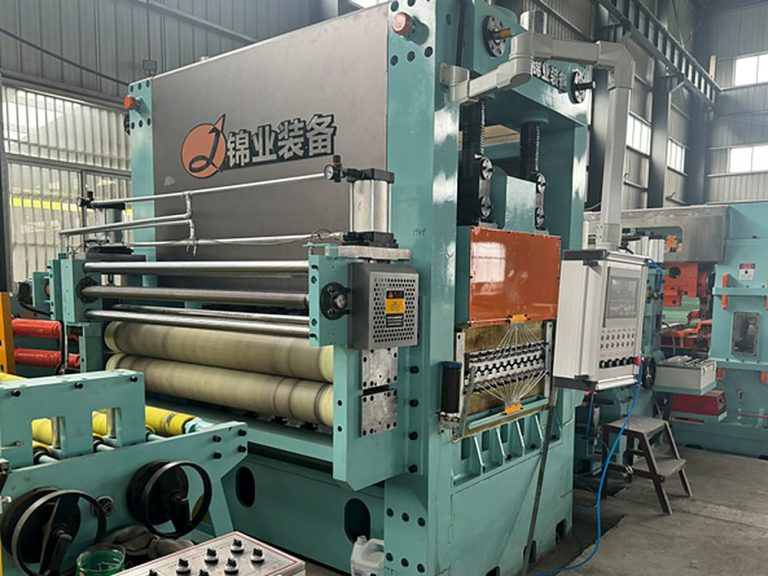
Slitting Stainless Steel: Why It Is Harder Than Mild Steel
Work hardening, cutting force and surface marking: three reasons stainless needs a different slitting line, and what to change in the specification.
Read more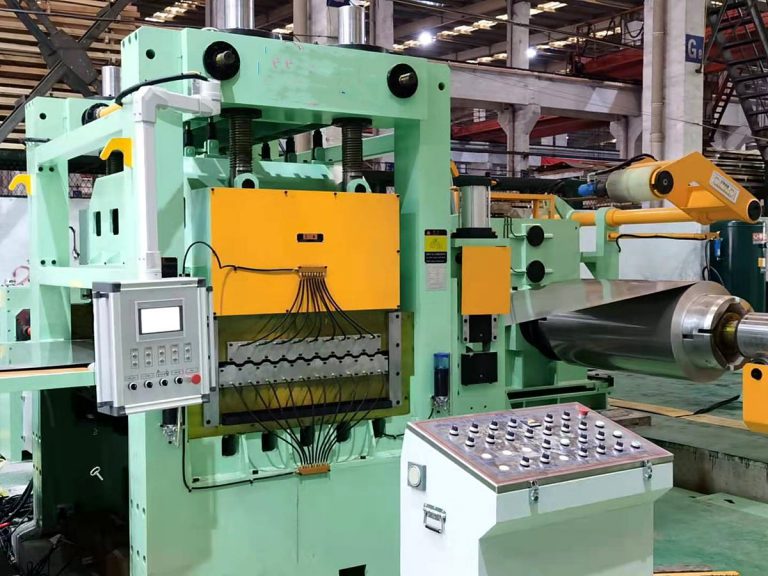
Industry News
Flying, Rotary, Swing or Stop Shear: Choosing a CTL Shear
Stop, swing, rotary or flying: how thickness, speed and surface finish decide which shear a cut to length line is built around.
Read more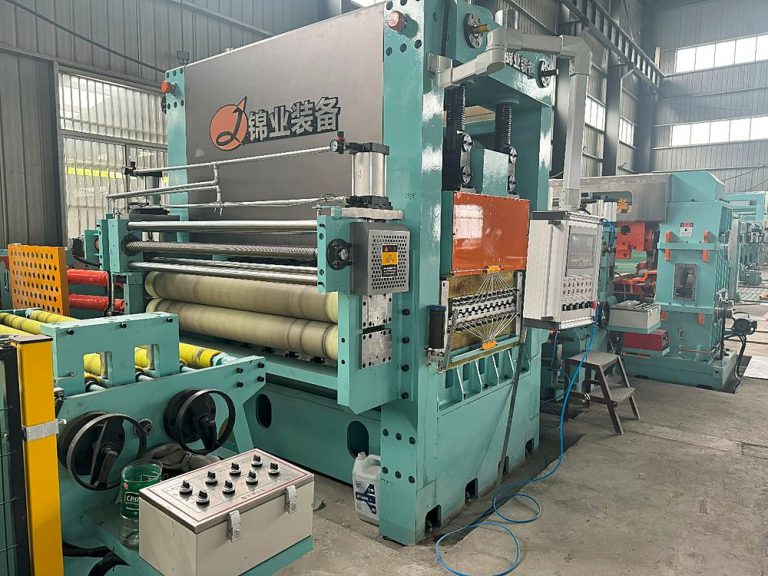
Industry News
Burr and Camber in Slit Strip: What the Tolerances Mean
Burr is a share of thickness and camber is millimetres per metre — how each is measured, what causes it, and which one the slitter owns.
Read moreTalk to us
Working on a line like this one?
Tell us the coil or sheet you need to produce. We will come back with the configuration, the working range and the delivery schedule that fit your project.
- Material grade, thickness and coil width
- Finished strip width or cut length
- Target output and site conditions