
Flying, Rotary, Swing or Stop Shear: Choosing a CTL Shear
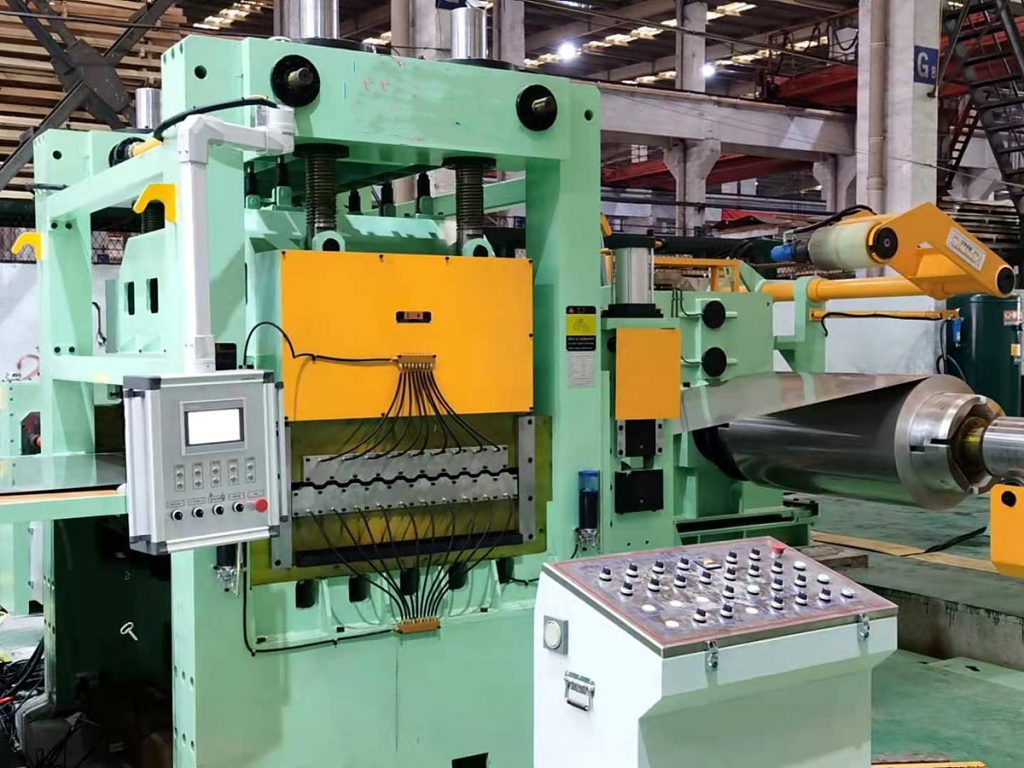
Four shear types cover almost every cut to length line: stop, swing, rotary and flying. The choice is set by thickness, line speed and how the sheet is stacked — not by which one sounds most advanced. A stop shear is the right answer for 8 mm plate at low output, and a flying shear is wasted money on a line that never runs above 30 m/min.
What each shear does, in one line
- Stop shear — the line stops, a guillotine blade comes down, the line restarts.
- Swing shear — the blade swings with the moving strip, cutting on the fly without stopping the line.
- Rotary shear — two rotating knives cut continuously as the strip passes between them.
- Flying shear — a servo-driven carriage accelerates to strip speed, cuts while moving, then returns.
Stop shear: simplest, and still correct for plate
The strip is measured, the line decelerates to a stop, the blade cuts, and the line accelerates again. Every start and stop costs time, so throughput is limited by the acceleration of the coil, the leveler and the stacker rather than by the shear.
Where it wins: heavy gauge, short runs, and any job where the cut edge must be dead straight with no arc. A stop shear cuts a square edge at any thickness the blade can handle, and it is the cheapest of the four to buy and to maintain. Where it loses: thin sheet at high output, because the line spends more time accelerating than cutting.
Swing shear: the middle path
A swing shear carries the blade on a pivoting arm that follows the strip during the cut, so the line keeps running. It handles medium gauge at moderate speed and produces a good square edge without the complexity of a full flying carriage.
It is the usual answer when the thickness rules out a rotary shear but the output rules out stopping the line every cut. A line in the 0.5–3.5 mm range at 1600 mm wide is a typical swing shear job — see this 1650 mm swing shear line for the configuration.
Rotary shear: thin sheet at speed
Two rotating knives cut continuously, so there is no acceleration cycle at all. The result is high and constant line speed, a clean sheared edge, and very little shock load on the line — which is why rotary shear dominates thin stainless and thin galvanised work where surface marking matters.
The limit is thickness. Above roughly 3 mm the knife loading and the required cutting force make the rotary design impractical, and the line moves to a flying or swing shear. A 0.3–3 mm stainless line with a rotary shear and a leveler ahead of it will hold flatness and edge quality that a stop shear cannot match at any speed.
Flying shear: speed across a wider gauge range
The carriage runs on a linear guide, driven by a servo that matches strip speed at the moment of cut, then returns to the start position. Because the blade travels with the strip, the cut is square and the line never stops.
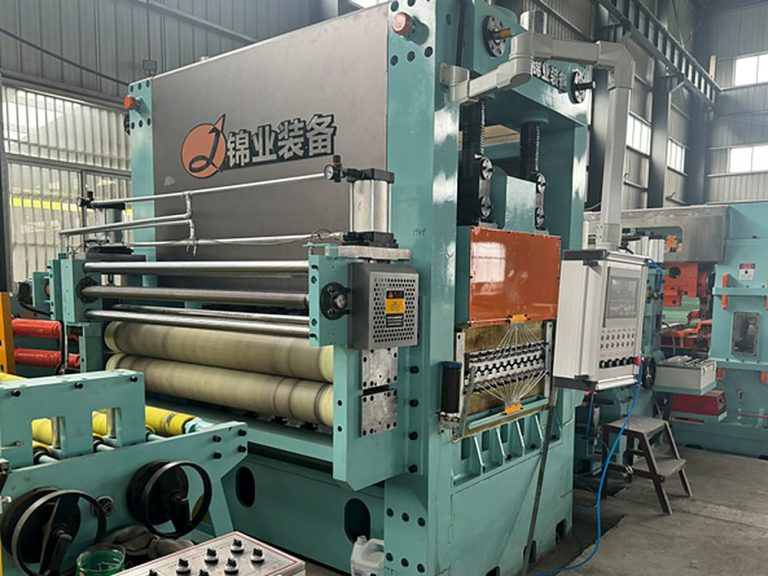
Flying shear is the most flexible of the four: it covers thin sheet at very high speed and medium plate at moderate speed, and the cut length is set entirely in the control system. It is also the most expensive, and it needs maintenance attention on the guide, the servo and the synchronisation encoder. A stainless line at 0.4–3 mm × 1850 mm built around a flying shear is shown in this 1850 mm flying shear machine.
Matching shear to thickness and output
The selection follows a short decision path:
- Over 6 mm, or low output, or a mix of jobs → stop shear. Straight edge, lowest cost, no synchronisation to maintain.
- 3–6 mm at moderate speed → swing shear. Continuous line, square edge, simpler than a flying carriage.
- Up to about 3 mm, thin gauge, high speed, surface-critical → rotary shear. No stop-start marking, clean edge.
- Thin to medium gauge at high speed with changing cut lengths → flying shear. Widest range, highest cost, highest flexibility.
Two inputs override the table. Surface finish can push a line toward rotary even when thickness would allow a swing shear, because a stop shear leaves a mark where the strip decelerates against the gauge. And cut length accuracy can push toward flying, since the servo carriage does not depend on the strip coming to rest.
What the shear changes downstream
The shear is not a standalone choice. A rotary shear at 120 m/min needs a stacker that can keep up and a leveler that can hold flatness at that speed; a stop shear at 20 m/min does not. Changing the shear without changing the take-away is how lines end up rated at a speed they never reach.
The same applies to cut length. Short sheets at high speed need a stacker with a fast drop and good alignment, otherwise the sheets are cut accurately and stacked badly. Sheet flatness — typically within ±1 mm per square metre on light gauge — is held by the leveler, not the shear, but a shear that shocks the line will undo some of the leveler’s work.
What to specify before choosing
- Material, thickness range, and the gauge you run most.
- Cut length range and the tolerance you need on it.
- Required output in sheets per minute or tonnes per shift.
- Surface requirements — whether a deceleration mark is acceptable.
- Stacking: sheet size, bundle weight, and how it leaves the line.
With those five, the shear type is determined rather than negotiated. The full cut to length line range covers 0.3–16 mm and up to 2000 mm wide, and the four shear types appear across it for exactly these reasons.
If you already know the material and the output but not the shear, send those two figures and we will say which type the duty points to — and what it costs you in speed if you choose the cheaper one.
More from the workshop
Related news
Industry News
Slitting Stainless Steel: Why It Is Harder Than Mild Steel
Work hardening, cutting force and surface marking: three reasons stainless needs a different slitting line, and what to change in the specification.
Read more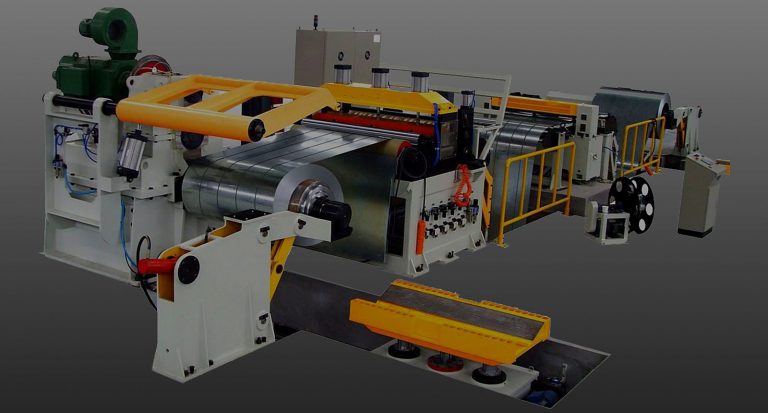
Industry News
What Decides Cut to Length Accuracy on a Coil Line?
Length error comes from the measuring roll, the leveler, shear response and the stacker — where each one costs you millimetres, and what to specify.
Read more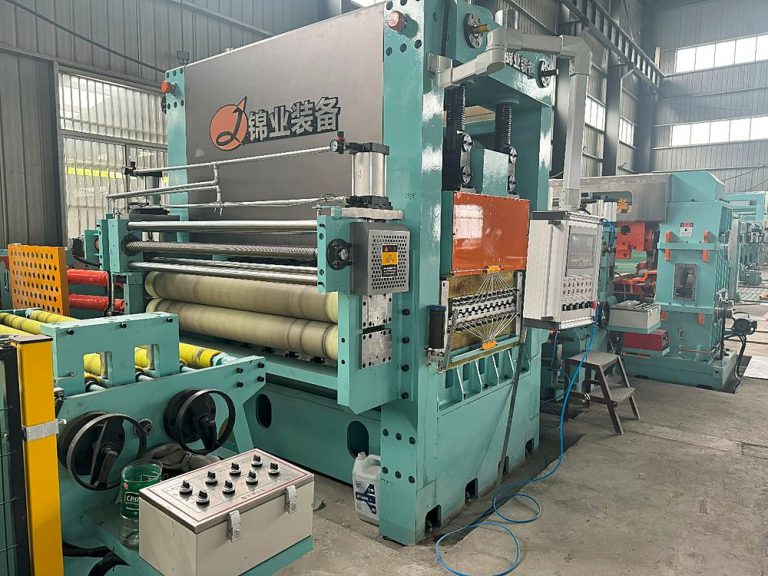
Industry News
Burr and Camber in Slit Strip: What the Tolerances Mean
Burr is a share of thickness and camber is millimetres per metre — how each is measured, what causes it, and which one the slitter owns.
Read moreTalk to us
Working on a line like this one?
Tell us the coil or sheet you need to produce. We will come back with the configuration, the working range and the delivery schedule that fit your project.
- Material grade, thickness and coil width
- Finished strip width or cut length
- Target output and site conditions