
How to Specify a Coil Slitting Line: Six Inputs That Set It
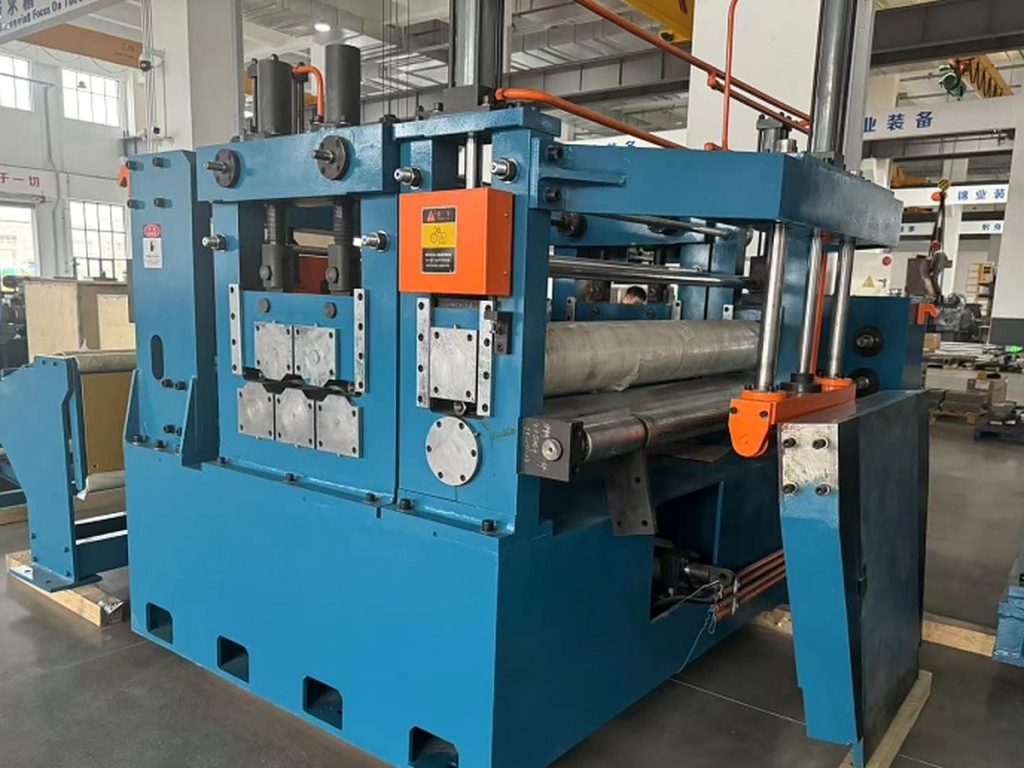
Six inputs decide what a slitting line has to be: the material grade and its yield strength, the coil thickness and width range, the coil weight and inside diameter, the number of strips and the narrowest strip, the accuracy the finished strip must hold, and the line speed you need. Send those six and a builder can size the mandrel, the motor, the tension system and the footprint. Without them, any quotation is a guess dressed up as a price.
Most inquiries start the other way round: “I need a 0.5–3 × 1250 mm slitting line.” That is not an input, it is a conclusion. Two lines with the same thickness and width can differ by half in motor power and by a third in price, because one is cutting cold rolled mild steel and the other is cutting 430 stainless at the same gauge.
1. Material grade and yield strength
The slitter does not cut a thickness, it cuts a strength. A 1.5 mm cold rolled coil at 280 MPa and a 1.5 mm 430 stainless coil at 345 MPa ask different things of the same blade, and the difference shows up in three places: the motor, the mandrel, and the edge quality.
- Cold rolled mild steel — the baseline. Forgiving on blade clearance and on tension.
- Hot rolled and pickled — thicker, heavier crowns, more scale. The line needs more power and a heavier leveler.
- Galvanised — the coating is soft and marks easily. Contact rolls must be rubber-covered or the strip is scratched before it reaches the customer.
- Stainless 304 / 430 — work hardens as it is cut, so the blade wears faster and the burr grows sooner. Cutting without a burr limit is not the same as cutting stainless without a burr limit.
- Aluminium — low strength, high galling risk. Blade clearance and lubrication matter more than power.
Tell us the grade and the yield strength in MPa if you have it. “Mild steel” is enough to start; “304, 0.8 mm, 2B finish” is enough to quote.
2. Thickness and width — as a range, not a single number
A line that runs 0.5–3 mm is a different machine from one that runs 0.3–12 mm, even when both are described as “1250 mm slitting lines”. The wide range needs a heavier frame, a larger mandrel and either a gear change or a two-speed ratio so the line is not run at 12 mm with a motor sized for 0.3 mm.
Give the range and the thickness you expect to run most of the time. The minimum thickness sets the strip tension and the risk of tower build-up on the recoiler; the maximum sets the power. The most-run gauge is what the line should be tuned for — a line bought for its worst case runs inefficiently for the other 90% of the year.
The same applies to width. Maximum coil width sets the mandrel length and the distance between the housings. Minimum width matters just as much: below about 400 mm, edge trim handling and recoiler guidance start to need their own attention. Coil widths outside the range the line was built for are the most common reason a “1250 mm line” ends up running 1100 mm coil.
3. Coil weight, inside diameter, outside diameter
Coil weight decides the uncoiler, the recoiler and the foundation. A 5 t coil and a 25 t coil are not the same machine with a bigger motor — the mandrel, the bearings, the hydraulic pressure and the pit all change.
- Inside diameter — 508 mm and 610 mm are the two common bore sizes. A mandrel built for 508 mm will not take a 610 mm coil without a sleeve, and a sleeve costs you tension accuracy.
- Outside diameter — sets how far the mandrel overhangs and how much floor space the coil needs behind the line.
- Coil weight — 5, 10, 15, 20 and 25 t are the usual steps. Weight also drives tower build-up: a heavy coil at low tension will telescope no matter how good the slitter is.
If you buy coil from several mills, send the widest spread you actually receive, not the nominal figure from one supplier.
4. Strip count and the narrowest strip
Six strips of 150 mm and twenty strips of 25 mm are two different slitting lines. The strip count sets the number of spacers on the mandrel and the setup time between orders; the narrowest strip sets the minimum spacer width, the edge trim allowance and the recoiler’s ability to keep every strip flat and separately wound.
Two practical limits to check before you specify:
- Minimum slit width against thickness. A 20 mm strip in 0.3 mm sheet is routine. A 20 mm strip in 6 mm plate is not — the strip is too stiff to wind evenly and the burr has nowhere to go.
- Edge trim. Trimming both edges needs 5–10 mm per side depending on gauge and camber. A 1250 mm coil split into 6 × 200 mm strips leaves 50 mm of trim, which is fine. Split it into 6 × 205 mm and you have nothing left for the trimmer.
Slitting lines in the JINYE slitting line range are configured from 0.3 mm to 12 mm and up to 2000 mm wide, which is wide enough that the strip count is usually what decides the mandrel rather than the coil size.
5. The accuracy the strip must hold
Accuracy is where most of the price difference sits, and it is the input buyers state least precisely. “High precision” is not a specification. Four numbers are:
- Strip width tolerance — ±0.05 mm is achievable below 100 mm wide and 1.5 mm thick on a well-set line; ±0.10 mm is the realistic working tolerance for general work.
- Camber — 1.0 mm in 2 m is a normal target for slit strip. Tighter than that needs a line leveler ahead of the slitter and a tension stand after it, not just a better blade.
- Burr height — usually expressed as a share of strip thickness: 3% for thin material, 4% for heavier gauge. Burr is set by blade clearance and blade condition, so a burr limit is also a blade maintenance schedule.
- Edge alignment and tower — ±1.0 mm for strip edge alignment in the recoil, ±2.0 mm for tower build-up across the coil width.
Each of those numbers buys equipment. Camber needs a leveler. Edge alignment needs an EPC or CPC guide. Tower control needs tension and a pressure roll. Burr needs a blade material and clearance matched to the grade — the choice between T10, H13, HM-3 and 6CrW2Si is covered in the blade material note.
6. Line speed and what happens at the end of the line
Speed is not a headline number. A line rated at 200 m/min only reaches it on a long, heavy coil with a stable tension; on a 3 t coil it spends most of its time accelerating and decelerating. What matters is the cycle: coil load, threading, slitting, rewind, unload, and the setup between orders.
The end of the line decides the machine type. If the product leaves as slit strip on a recoiler, you are buying a slitting line. If it leaves as flat sheet on a stacker, you are buying a cut to length line, and shear type — flying, rotary, swing or stop — follows the material and the output. Mixing the two in one inquiry is the second most common reason a project stalls.
What each input changes on the machine
- Yield strength up → motor power, gearbox, blade material, burr allowance.
- Maximum thickness up → frame section, mandrel diameter, hydraulic pressure, foundation.
- Coil weight up → mandrel, bearings, uncoiler and recoiler rating, pit depth.
- Strip count up → spacer count, setup time, recoiler separating and guiding.
- Tolerance tighter → leveler, EPC/CPC guide, tension control, inspection gauge.
- Speed up → recoiler dynamics, hydraulic capacity, control response, and a take-away that can keep up.
A worked example
Take a service centre running cold rolled and galvanised coil, 0.5–3.0 mm thick, 1250 mm wide, 15 t coils on a 508 mm bore, splitting into six strips with a 150 mm minimum, ±0.10 mm on width, 120 m/min on the recoiler.
What that adds up to: a 15 t hydraulic uncoiler with a 508 mm mandrel, a peeler and a hold-down, a four-high leveler because the strip has to stay flat enough to hold camber, an edge trimmer with its own scrap winder, a single slitter head with hydraulic lock, an EPC guide ahead of the recoiler, and a recoiler with a pressure roll and separate strip separating. Nothing exotic — but every unit is there because one of the six inputs asked for it.
A line at the light end of that range, around 0.3–3 × 1300 mm, is shown in this 1300 mm automatic slitting line. Step up to 6 mm and the same width needs a heavier mandrel and a two-speed gearbox, as in the 0.6–6 × 1600 mm line. The strip is the same width in both cases; the machine is not.
What to send with an inquiry
Six lines, one per input. That is the whole brief:
- Material grade, and yield strength if you know it.
- Thickness range, plus the gauge you run most.
- Coil width range, plus the width you run most.
- Coil weight, inside diameter and outside diameter.
- Strip count and narrowest strip, and any edge trim you need.
- Width tolerance, camber, burr limit, and the line speed you want.
If one of the six is missing, we will ask for it rather than assume it — an assumed coil weight is the single most expensive guess in a slitting line quotation. Send the list to the inquiry form or by email and the reply will be a configuration with the working range it covers, not a model number.
More from the workshop
Related news
Industry News
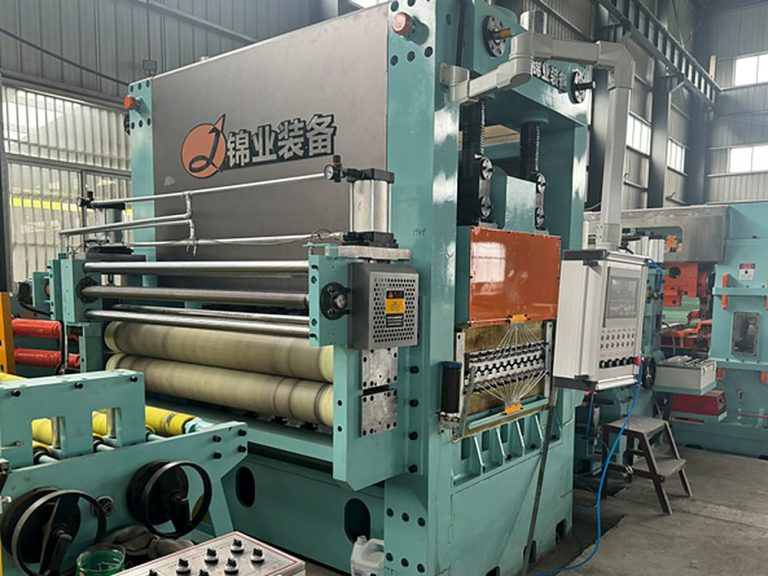
Slitting Stainless Steel: Why It Is Harder Than Mild Steel
Work hardening, cutting force and surface marking: three reasons stainless needs a different slitting line, and what to change in the specification.
Read more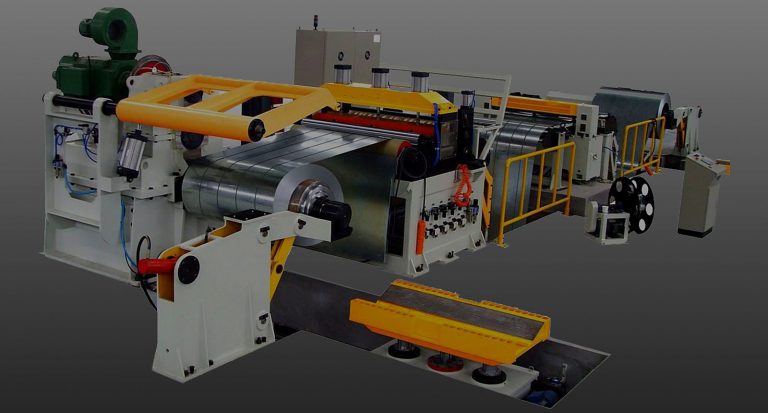
Industry News
What Decides Cut to Length Accuracy on a Coil Line?
Length error comes from the measuring roll, the leveler, shear response and the stacker — where each one costs you millimetres, and what to specify.
Read more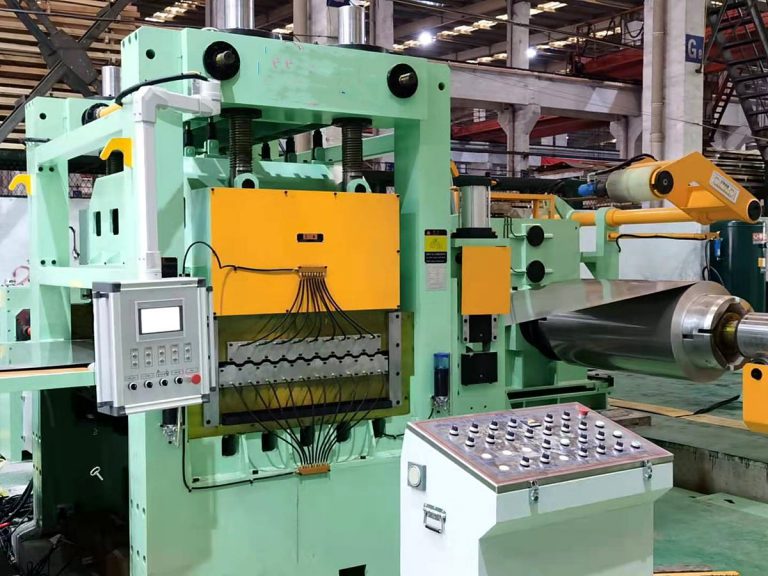
Industry News
Flying, Rotary, Swing or Stop Shear: Choosing a CTL Shear
Stop, swing, rotary or flying: how thickness, speed and surface finish decide which shear a cut to length line is built around.
Read moreTalk to us
Working on a line like this one?
Tell us the coil or sheet you need to produce. We will come back with the configuration, the working range and the delivery schedule that fit your project.
- Material grade, thickness and coil width
- Finished strip width or cut length
- Target output and site conditions